Madhubani Saree
Madhubani art, also known as Mithila painting, is a vibrant folk tradition from Bihar. Each saree is a hand-painted masterpiece, featuring intricate geometrical patterns and mythical narratives that celebrate the deep connection between nature, spirituality, and culture.
Ancient Roots

The Legend of
Mithila

The history of Madhubani art is believed to go back to the time of the Ramayana. Legend says King Janaka of Mithila commissioned artists to paint the walls for his daughter Sita's wedding. Traditionally practiced on mud walls, this sacred art has transitioned onto silk and cotton, preserving its divine essence.
Ancient Roots
The Heartland

Born in
Bihar

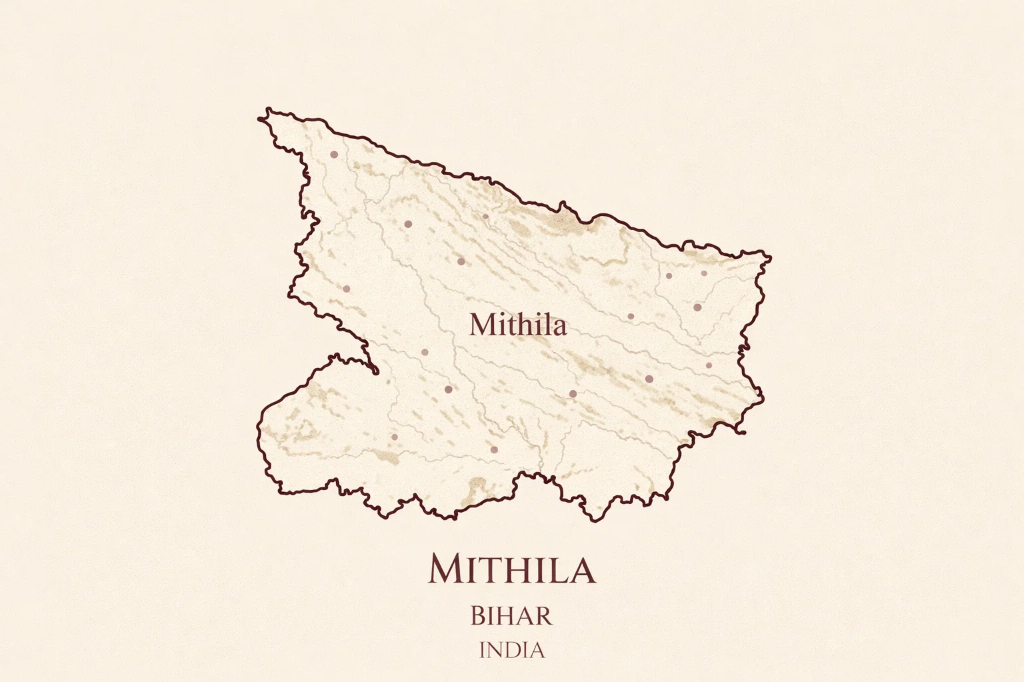
Originating from the Mithila region of Bihar, Madhubani art is a community tradition where every village tells its own story. The art form gained global recognition in the 1960s, empowering local women artisans and becoming a symbol of India's rich cultural heritage.
Madhubani Heartland
Natural Palette

Earth's Own
Colors

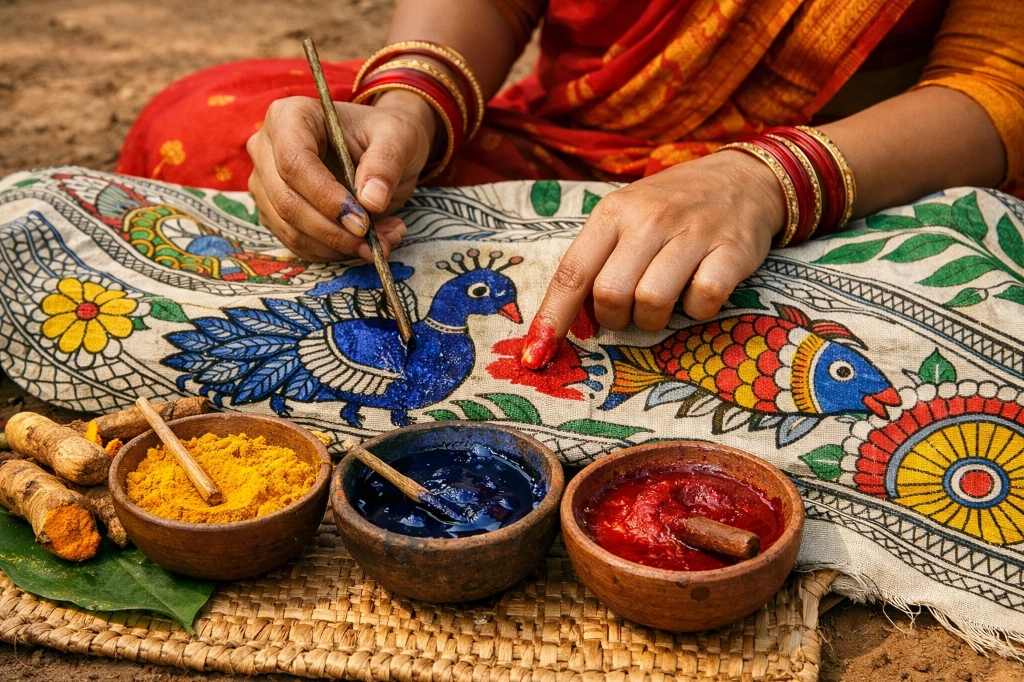
The vibrant hues of Madhubani paintings come directly from nature. Indigo for blue, turmeric for yellow, and sandalwood for red—these organic dyes are applied using twigs, matchsticks, and fingers, ensuring every saree is as pure as the art itself.
Natural Materials
Master Artistry

The Artist's
Soul

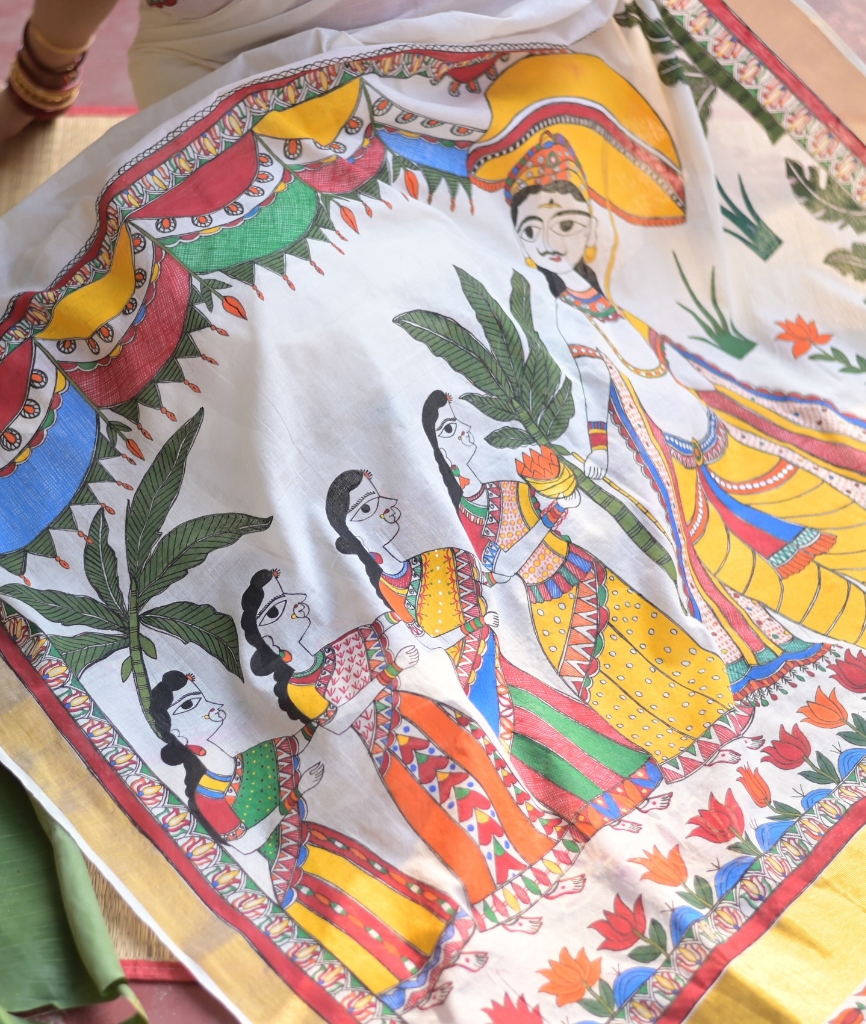
Madhubani painting is characterized by its eye-catching geometrical patterns and absence of empty space. Every motif, from the 'Kohbar' to depictions of Krishna and nature, is hand-painted with painstaking precision, making each drape a wearable piece of folk history.
Master Artistry